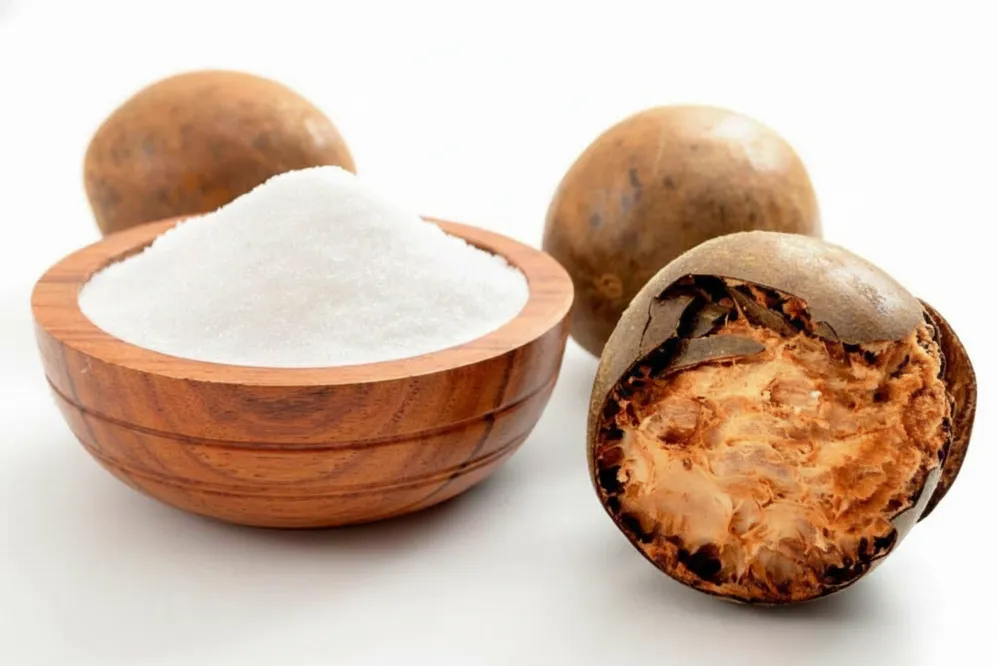

Introduction: Why Does “Healthy” Sugar Taste So Weird?
You are making the switch to a low-sugar lifestyle. You bought the expensive bag of “Natural Sweetener.” But the result? Your coffee tastes metallic, your cookies are dry and pale, and your stomach is rumbling.
You are not alone. While consumers demand natural options like Stevia, Monk Fruit, and Erythritol, the transition from sucrose (table sugar) is rarely smooth.
This article uses the latest food science to solve the four biggest pain points of natural sweeteners: Taste, Baking Chemistry, Gut Health, and Cost.
Problem 1: The “Fake” Taste (Aftertaste & Cooling Effect)
The Pain Point: Stevia often lingers with a bitter, licorice-like aftertaste. Erythritol creates a “minty” cooling sensation that feels strange in baked goods like cookies.
The Solution: The “Stacking” Strategy Don’t rely on just one sweetener. The secret lies in blending.
- Cancel Out the Cooling Effect:
- The Formula: Mix Erythritol with Monk Fruit or Stevia.
- Why it works: Erythritol has a negative heat of solution (it absorbs heat, creating coldness). Monk Fruit has a warm, lingering sweetness. When combined, they cancel each other out, mimicking the neutral profile of sugar.
- Action Item: Look for “Monk Fruit Blends” or mix them yourself at home.
- Fixing the “Empty” Mouthfeel:
- Natural sweeteners often lack “body.” Add a pinch of Inulin (Chicory Root Fiber) to your beverages. It adds viscosity and creaminess that water-based sweeteners lack.
Problem 2: Baking Failures (No Browning, Dry Texture)
The Pain Point: Sugar does more than sweeten; it provides moisture and caramelization. Most natural sweeteners (especially Erythritol) do not caramelize, resulting in pale, dry, and hard pastries that stale quickly.
The Solution: Use Allulose for Chemistry
- The Game Changer: Allulose
- What is it? A rare sugar found in figs and raisins.
- The Fix: Unlike Erythritol, Allulose undergoes the Maillard Reaction. It browns, caramelizes, and holds moisture just like sugar.
- Best For: Soft cookies, caramels, ice cream (it prevents freezing rock-hard), and cakes.
- The “Powdered” Rule:
- If you must use Erythritol for baking, always use the Powdered (Confectioners) version, not the granular one. This prevents the “gritty” texture caused by recrystallization after cooling.
Problem 3: Safety & Gut Health (The “Bloating” Fear)
The Pain Point: Excessive consumption of sugar alcohols leads to bloating, gas, and diarrhea. Recent headlines about heart health have also caused confusion.
The Solution: Know Your Tolerance & Source
- Avoid the “Old” Sugar Alcohols:
- Steer clear of Maltitol. It has a high glycemic impact and is notorious for causing severe gastric distress.
- The Safe Zone:
- Erythritol: It is absorbed in the small intestine and excreted via urine, meaning less fermentation in the gut. Limit: Under 0.6g per kg of body weight.
- Allulose & Monk Fruit: These are generally non-fermentable and have the highest digestive tolerance.
Problem 4: Confusion & Cost (Reading the Label)
The Pain Point: “Monk Fruit Sweetener” is often 99% Erythritol, but sold at a premium price.
The Solution: Check the “Sweetness Parity”
- Identify Fillers:
- Always read the ingredient list. If Erythritol is the first ingredient, do not pay premium Monk Fruit prices.
- Calculate Cost Per Use, Not Per Gram:
- High-Intensity Extracts (Pure Stevia/Monk Fruit): Expensive upfront ($50+), but one tiny scoop equals a cup of sugar. These are the most cost-effective long-term.
- 1:1 Blends: Convenient for baking but you are paying for “fillers” to bulk it up.
FAQ (Optimized for Voice Search & AEO)
- Q: What is the closest natural sweetener to sugar in taste?
- A: Allulose is currently considered the closest to sugar in taste and texture, with no cooling effect or bitter aftertaste.
- Q: Why do my keto cookies taste cooling?
- A: This is caused by Erythritol. To fix it, mix Erythritol with Stevia or switch to Allulose.
- Q: Is Monk Fruit safe for diabetics?
- A: Yes, pure Monk Fruit has zero calories and zero glycemic index, making it safe for blood sugar management.
Conclusion You don’t have to sacrifice flavor for health. For beverages, use Monk Fruit drops. For baking, switch to Allulose. For everyday value, use an Erythritol blend. By choosing the right tool for the job, you can solve the pain points of natural sweeteners.
(Did you find this guide helpful? Share it with your low-sugar baking group!)