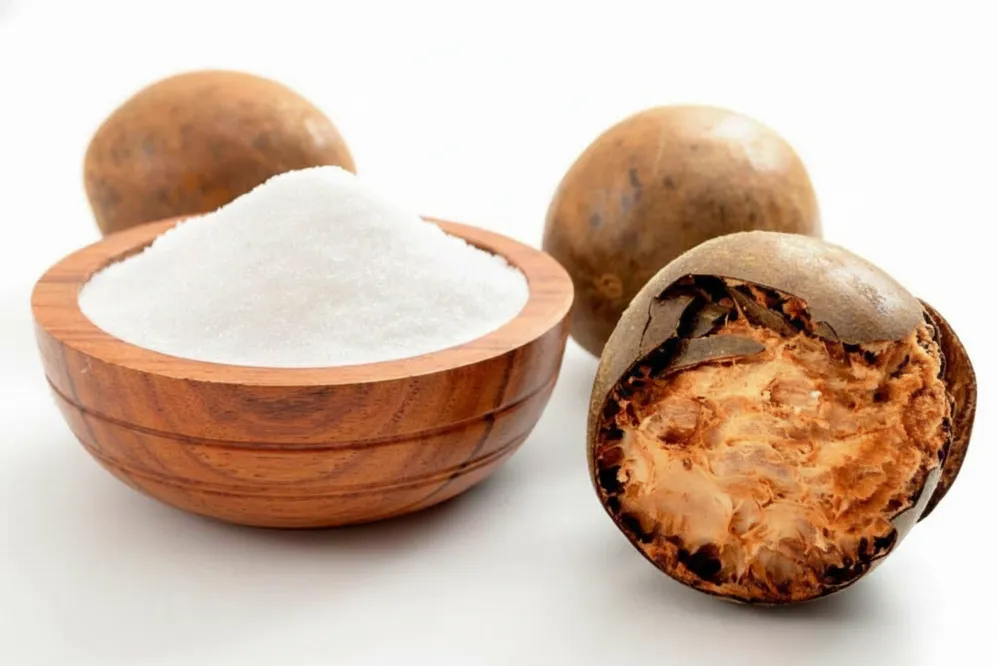

If you only want the short answer, here it is: neither stevia nor monk fruit is universally “better.” In 2026, the smarter question is: better for what application? In the U.S., both stevia-derived sweeteners and monk-fruit-derived sweeteners are used as high-intensity sweeteners, which means they deliver a lot of sweetness at very low usage levels. FDA materials describe certain steviol glycosides from Stevia rebaudiana and extracts from Siraitia grosvenorii (Luo Han Guo, or monk fruit) within this category.
A lot of the confusion starts with the word “stevia.” People often talk about stevia as if it were one thing, but in practice the sensory result depends heavily on which steviol glycosides are being used. Sensory research has shown that Reb D and Reb M can be perceived more favorably than Reb A in some applications, including ice cream, and consumer sensory work has also found meaningful differences among Reb A, D, and M. So when someone says “I hate stevia,” they may really be reacting to a specific glycoside profile, purity level, or formulation system.
Monk fruit has a similar problem, but with a different chemistry. Its sweetness comes primarily from mogrosides, and EFSA’s scientific opinion notes that mogroside V is the main mogroside in monk fruit extract. FDA also lists Luo Han Guo / monk fruit extracts among plant- and fruit-based high-intensity sweeteners, and notes sweetness intensity on the order of about 100 to 250 times sweeter than sucrose for monk fruit ingredients. That sounds impressive, but it also means monk fruit is usually better at replacing sweetness than replacing sugar as a physical ingredient.
From a regulatory perspective, it is also useful to separate U.S. use from global regulatory status. In the U.S., FDA says GRAS notices have been submitted for certain steviol glycosides and monk fruit extracts. In the EU, steviol glycosides have an established safety evaluation and an ADI of 4 mg/kg body weight/day expressed as steviol equivalents, while EFSA’s 2019 opinion on monk fruit extract concluded that the toxicology database was insufficient to conclude on safety for use as a food additive under that application. That does not mean monk fruit is “banned everywhere” or automatically unsafe; it means market access and evidence standards differ by jurisdiction.
The real dividing line between stevia and monk fruit is often not regulatory at all. It is sensory strategy plus application design. If you are formulating a flavored beverage, coffee creamer, powdered drink mix, or drops, either one can work well when the flavor system is matched properly. But if you are trying to replace table sugar in cookies, cakes, sauces, or fillings, you have to remember that sugar does much more than sweeten. Food science studies show sucrose affects texture, starch behavior, and baking structure, which is why removing sugar from baked goods is more complicated than removing sweetness from beverages. In practical terms, high-intensity sweeteners like stevia and monk fruit usually need help from another ingredient system when the formula depends on bulk, browning, or mouthfeel.
So which one should you choose? My own framework is simple. Choose stevia when you need broad formulation flexibility and are willing to work carefully with the specific glycoside system. Choose monk fruit when you want a strong natural-fruit positioning and a sweetness profile that some consumers perceive as friendlier than older stevia systems. But in both cases, the most important question is not the marketing name on the front of the pack. It is: which molecule, which purity, in which matrix, with what supporting ingredients? That is usually where performance is won or lost.
If I had to summarize the 2026 view in one sentence, it would be this: stevia and monk fruit are not rivals so much as tools, and the best formulators stop asking “which is best?” and start asking “which system solves this product better?” That shift in thinking is where most sugar-reduction projects start getting smarter.